 DNAtest
R1b Haplogroup: Origin, Age and the Ancient People Who Carried It
DNAtest360 earns a commission if you buy through links on this page.
If your father's father's father's line runs back to Ireland, Wales, Spain, France or the Netherlands, there's a good chance it belongs to haplogroup R1b. It is the most common paternal line in western Europe, carried today by many tens of millions of men. For decades it was thought to be the line of Europe's Ice Age cave painters. Ancient DNA told a different, more dramatic story: a branch of R1b that spread across the continent with steppe-descended newcomers less than 5,000 years ago. Here's where R1b came from, how old it is, and which ancient peoples carried it.
In short
- R1b is a branch of the human Y-chromosome tree, passed from father to son. It split from its sister line R1a in the last Ice Age, probably somewhere in western Eurasia; its exact birthplace is unknown.
- The oldest R1b man yet found lived about 14,000 years ago at Villabruna in the Italian Alps. Early branches were carried by scattered hunter-gatherers from the Balkans to the Volga.
- Most R1b men today belong to one young branch, R-M269. Its eastern twig, Z2103, dominated the Yamnaya. Its western twigs, P312 and U106, spread with Bell Beaker and related peoples from about 2500 BCE.
- Your raw DNA file can usually place you on R1b and often on a major sub-branch. It follows one line out of thousands of ancestors, so it is a clue to deep roots, not a measure of your overall ancestry.
What is R1b?
Your paternal haplogroup is your direct father-to-son line, read from the Y chromosome. Every so often a small mutation appears on that chromosome and is then passed to every son, grandson and great-grandson of the man who first carried it. Each mutation marks a new branch. (If haplogroups are new to you, start with our guide What is my haplogroup?)
R1b is the branch defined by a mutation called M343. It sits inside haplogroup R, alongside its sister R1a, which is common from Scandinavia and Poland to India. Every man in R1b shares one direct paternal ancestor who carried M343. He lived during the late Ice Age, around 20,000 years ago by most estimates, though dates based on mutation rates come with wide error ranges.
Because the tree is so large, companies usually report R1b by the name of its most important downstream marker, such as R-M269, R-P312 or R-L21. Each one sits inside the one before it, like nesting dolls.
The first R1b men: Ice Age and Stone Age hunters
For a long time, the oldest R1b was a matter of guesswork. Ancient DNA now gives real names and places.
- Villabruna, Italy, about 14,000 years ago. A hunter buried in a rock shelter in the Dolomites is the oldest known R1b man. A 2016 study of 51 Ice Age Europeans by Fu and colleagues found that he belonged to a population that spread across Europe as the ice retreated. That population gave rise to the Western Hunter-Gatherers.
- The Balkans and the Volga. Later hunter-gatherers carried early R1b branches too. Men from the Iron Gates gorge on the Danube and from the middle Volga, around Samara, carried R1b thousands of years before farming reached them.
These early branches are not the ones most Europeans carry today. Most of them later dwindled or vanished in Europe. One early side branch, R-V88, survives today mainly in Sardinia and in parts of north-central Africa, especially among Chadic-speaking peoples around Lake Chad, a reminder that paternal lines can travel in unexpected directions.
The branch that took over: R-M269
The great majority of R1b men alive today share a much younger ancestor. His branch is R-M269, and its common ancestor is usually dated to roughly 6,000 to 7,000 years ago. Soon after, M269 split again. Two of its daughter lines matter most:
- Z2103, the eastern line. It was the main paternal line of the Yamnaya, the wagon-driving herders of the Pontic-Caspian steppe after about 3300 BCE. Haak and colleagues reported in 2015 that every Yamnaya man they sampled belonged to R1b, and later studies placed most of them in Z2103. Today it is most common in eastern Europe, the Balkans, the Caucasus, Anatolia and Armenia.
- L51, the western line. Its descendants, above all P312 and U106, now dominate western Europe. Oddly, L51 has not yet been found in Yamnaya graves. Its men must have lived somewhere nearby, perhaps on the western edge of the steppe world, and the exact route by which they reached central Europe is still being worked out.
That gap matters for anyone with western European R1b. Your line is closely related to the Yamnaya's, and your ancestors on that line almost certainly carried a lot of steppe ancestry. But it is not accurate to say a western R1b man descends from the Yamnaya on his paternal line. The lines were cousins.
Bell Beakers and the great replacement
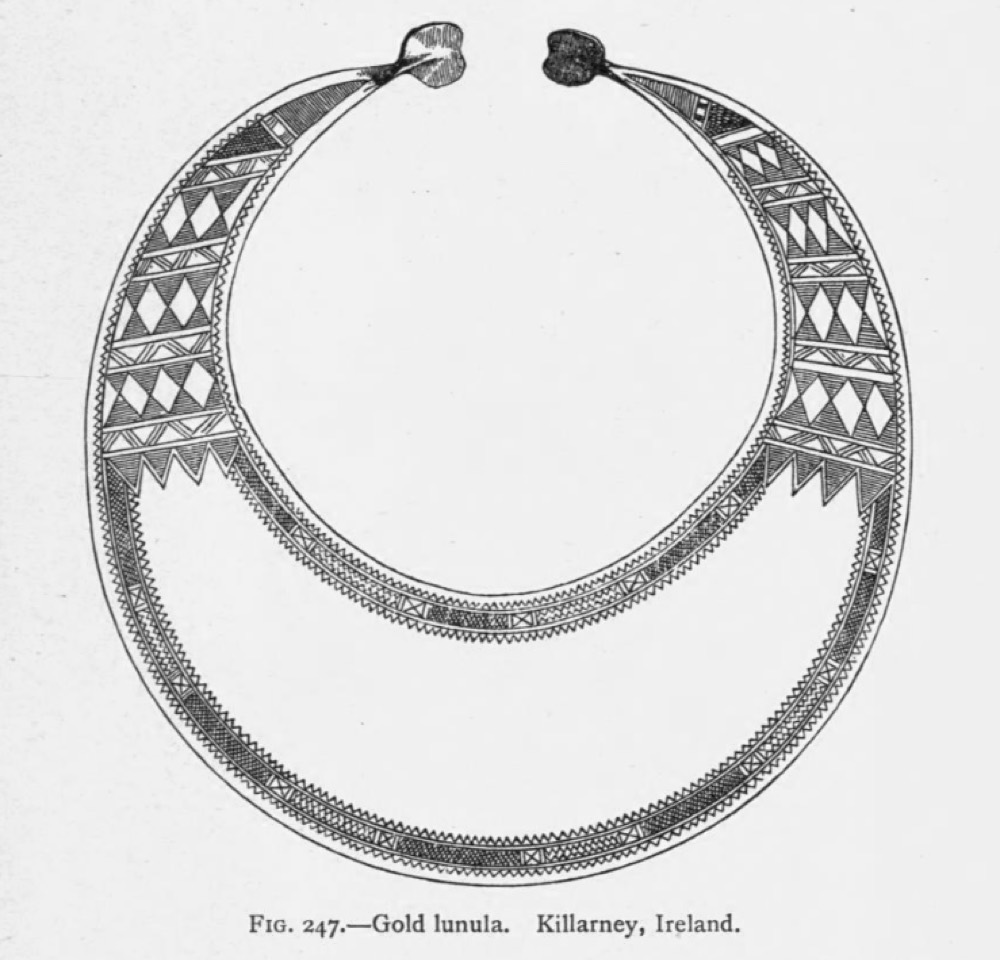
Around 2500 BCE, people buried with bell-shaped drinking cups, copper daggers and archers' wrist-guards spread across western and central Europe. Archaeologists call this the Bell Beaker phenomenon. Ancient DNA shows that many of its men in central Europe carried steppe ancestry, and that most of those whose Y chromosome could be read belonged to R1b-P312 or its close relatives.
What happened next is one of the most striking findings of ancient DNA.
- Britain. Olalde and colleagues reported in 2018 that after Beaker-associated people arrived, about 90% of Britain's gene pool was replaced within a few hundred years. The island's earlier Neolithic farmers, who built the first phases of Stonehenge, mostly carried other paternal lines, chiefly I2a. After the Beaker era, R1b dominates.
- Ireland. Three men buried on Rathlin Island, off County Antrim, between about 2000 and 1500 BCE carried R1b and substantial steppe ancestry. Their genomes look much like people in Ireland, Scotland and Wales today. The branch L21, inside P312, became the island's dominant paternal line and still is.
- Iberia. A 2019 study of 271 ancient Iberians found that steppe-related newcomers replaced about 40% of the peninsula's ancestry during the Bronze Age, but nearly 100% of its Y chromosomes. Within a few centuries, the older local paternal lines had almost disappeared, replaced mainly by R1b.
Why did R1b replace so many other male lines so fast? Nobody knows for certain. Scholars have pointed to plague that may have struck the farming population, to social systems that favoured some men's sons, and to the advantages of the newcomers' herding economy and metal. Most likely it was a mix, and the balance probably differed from region to region. What is clear is that the change happened in a few centuries, not a few millennia.
The major R1b branches today
Most western European men with R1b belong to one of a handful of branches, each with a centre of gravity on the map:
- R-L21 (inside P312): Ireland, Scotland, Wales, western England and Brittany. Often called a "Celtic" line, but it is older than any recorded Celtic language (see our Celtic DNA guide).
- R-DF27 (inside P312): Iberia and southern France, including the Basque Country.
- R-U152 (inside P312): the Alps, northern Italy, Switzerland and France.
- R-U106 (sister to P312): the Netherlands, northern Germany, Scandinavia and England, often linked to Germanic-speaking regions. Like L21, it is far older than the languages it is tied to.
- R-Z2103: eastern Europe, the Balkans, the Caucasus and western Asia.
R1b is found far beyond Europe too. Branches occur among the Bashkirs of the southern Urals, in Armenia and Anatolia, and, through R-V88, in north-central Africa. In the Americas and Australia it is common because so many men descend from European settlers.
The theory that ancient DNA overturned
Before ancient genomes, many researchers believed R1b was Europe's oldest paternal line. Because it peaks in the Basque Country and Ireland, at the far western edge of the continent, it was thought to mark men who sheltered in an Ice Age refuge in southern France and Iberia and then repopulated Europe as the glaciers melted. Some books still say so.
Ancient DNA tells a different story. The Ice Age foragers of western Europe mostly carried haplogroup I. The first farmers mostly carried G2a. R1b-M269 does not appear in the west until the steppe-related migrations of the third millennium BCE. Even the Basques, long seen as Europe's last Stone Age population, carry R1b mainly because of that later Bronze Age shift. The R1b you inherit is ancient, but its rise in western Europe is a Bronze Age story.
Do you carry R1b? What a DNA test can show
Only people with a Y chromosome, usually men, carry a paternal haplogroup. A woman can learn hers by testing her father, a brother, or another man on her father's direct paternal line.
- Consumer tests such as 23andMe report a paternal haplogroup, and their raw files contain enough Y markers to place most men on R1b and often on M269, P312, U106 or deeper.
- Dedicated Y-DNA tests read far more of the Y chromosome and can reach twigs only a few centuries old, which helps with surname research.
- What it can't show. Your Y line is one ancestor out of more than a thousand just ten generations back. R1b doesn't make you Celtic, Basque or Yamnaya, and it says nothing about the rest of your family tree. It tells you where one thread of your ancestry has travelled.
Find your branch and the ancient men who shared it
If you've already tested, download your raw DNA file (here's how) and run it through our free analyzer.
Already have a 23andMe, AncestryDNA or MyHeritage file? Open it in our free analyzer. It runs entirely in your browser, and your DNA is never uploaded.
Try the free analyzerThe analyzer reads the Y-chromosome and mitochondrial markers in your file, places your branches on the YFull and PhyloTree trees, and compares them with thousands of ancient individuals. If you're R1b, your report shows which ancient people carried your branch, from Beaker-era Britain to Bronze Age Iberia or the Yamnaya steppe. It runs in your browser, so your DNA file is never uploaded.
Haven't tested yet? 23andMe reports your paternal haplogroup and gives you a raw file that works with our analyzer. To pin your line to a precise branch of R1b, FamilyTreeDNA's Y-DNA tests go deepest. Not sure which fits? Take our 30-second quiz.
Frequently asked questions
Where did haplogroup R1b originate?
Probably somewhere in western Eurasia during the last Ice Age, around 20,000 years ago. Its exact homeland is unknown. The oldest R1b man found so far lived in northern Italy about 14,000 years ago. The branch most people carry today, R-M269, is much younger and was closely tied to the steppe and its edges about 5,000 to 6,000 years ago.
Is R1b Celtic or Viking?
Neither, strictly. R1b is thousands of years older than any Celtic or Norse language. Some branches are common where those peoples lived: L21 in Ireland, Scotland and Wales, U106 in the Netherlands, Germany, England and Scandinavia. A branch can hint at where one of your lines lived, but it can't make you a member of a historical people.
Did R1b come from the Yamnaya?
Partly. The Yamnaya men studied so far mostly carried R1b-Z2103, which is the main R1b line in eastern Europe and western Asia today. Western Europe's P312 and U106 come from a sister branch, L51, that has not been found in Yamnaya graves. Both groups of men carried steppe ancestry, but the western lines are cousins of the Yamnaya lines, not their direct descendants.
How common is R1b?
It is the most common paternal haplogroup in western Europe. It is carried by more than half of men in many western European countries and reaches its highest frequencies in Ireland, Wales and the Basque Country. It becomes rarer to the east, where R1a and other lines are more common.
Can a woman find out if she has R1b?
Not from her own DNA, since women don't carry a Y chromosome. She can test her father, a full brother, her father's brother or his son. Their raw DNA file, run through our analyzer, will show the family's paternal branch.
Sources
- Fu et al. 2016, "The genetic history of Ice Age Europe," Nature
- Haak et al. 2015, "Massive migration from the steppe was a source for Indo-European languages in Europe," Nature
- Olalde et al. 2018, "The Beaker phenomenon and the genomic transformation of northwest Europe," Nature
- Olalde et al. 2019, "The genomic history of the Iberian Peninsula over the past 8000 years," Science
- Cassidy et al. 2016, "Neolithic and Bronze Age migration to Ireland and establishment of the insular Atlantic genome," PNAS
- Wikipedia, "Haplogroup R1b"