 DNAtest
Who Were the Yamnaya? The Herders Who Remade Europe and India
DNAtest360 earns a commission if you buy through links on this page.
About 5,300 years ago, a new people appeared on the grasslands north of the Black and Caspian Seas. They lived with their cattle and sheep, rolled across the steppe in ox-drawn wagons, and raised great earth mounds over their dead. Archaeologists call them the Yamnaya. Within a few centuries their descendants had spread from Hungary to the Altai Mountains, and later deep into Europe and South Asia. Here's who they were, where they came from, and what their story means for your own DNA.
In short
- The Yamnaya were mobile herders of the Pontic-Caspian steppe, in today's Ukraine and southern Russia, from about 3300 BCE. By 3000 BCE their culture ran from Hungary to Kazakhstan.
- A 2025 study found that about four-fifths of their ancestry came from people living between the Caucasus and the lower Volga, with the rest from hunter-gatherers of Ukraine. Their ancestors took shape around 4000 BCE.
- They lived on sheep's milk, used cattle to pull wagons, and buried leaders under kurgans. Whether they rode horses is still debated.
- Their descendants carried steppe ancestry across Europe and, later, South Asia, likely along with Indo-European languages. Your raw DNA file can show whether your direct paternal line belongs to a branch they carried.
Who were the Yamnaya?
The name comes from the Russian word yama, meaning "pit," after the pit graves dug beneath their burial mounds. The dead were often laid on their backs with knees raised and sometimes sprinkled with red ochre. Thousands of these mounds, called kurgans, still rise above the flat steppe.
The Yamnaya were not a kingdom or a single tribe. They were a widespread way of life, which archaeologists call the Yamnaya complex, shared by many groups across a vast belt of grassland. A large ancient DNA study published in 2025 dates its appearance to around 3300 BCE across the steppes north of the Black and Caspian Seas. By about 3000 BCE it reached its greatest extent, from Hungary in the west to Kazakhstan in the east.
Further east, in the Altai Mountains of southern Siberia, the people of the Afanasievo culture had very similar graves and goods, and their genomes look almost the same as Yamnaya genomes. Whether the Afanasievo were Yamnaya migrants or shared a common source is still discussed, but the link shows how far this way of life travelled.
For a broader look at how Yamnaya ancestry shows up in people today, see our guide to how much steppe ancestry you have. This guide is about the Yamnaya themselves.
Where did the Yamnaya come from?
For years the standard answer, from landmark ancient DNA studies in 2015, was that the Yamnaya were a mix of Eastern Hunter-Gatherers from what is now Russia and a population with Near Eastern roots. That was right in outline, but it left the key question open: where and when did that mix happen?
In 2025, a team led by Iosif Lazaridis and David Reich published DNA from 435 ancient people of the steppe and the Caucasus, mostly from the Eneolithic (Copper Age) centuries before the Yamnaya. They found three gradients of ancestry:
- The Caucasus–lower Volga (CLV) cline, running from Neolithic people of the Caucasus to groups on the lower Volga, rich in Caucasus hunter-gatherer ancestry.
- The Volga cline, where CLV people mixed with Eastern Hunter-Gatherers upriver.
- The Dnipro cline, where CLV people moved west and mixed with hunter-gatherers of Neolithic Ukraine along the Dnipro and Don rivers.
The Yamnaya came out of that last group. Their ancestors, part of what archaeologists call the Serednii Stih culture, formed around 4000 BCE and grew rapidly from about 3750–3350 BCE. Overall, the CLV people supplied about four-fifths of Yamnaya ancestry.
The same study found CLV ancestry, but not Yamnaya ancestry, in Bronze Age central Anatolia, where people spoke Hittite, the oldest written Indo-European language. The authors propose that the language ancestral to both the Anatolian and the other Indo-European languages was spoken by CLV people some time between 4400 and 4000 BCE. It's a bold proposal, and linguists and archaeologists are still testing it.
How the Yamnaya lived
The Yamnaya were herders on the move. Their wealth was in animals, and their homes could travel with them. Some of the oldest known wheeled vehicles in Europe come from their graves: heavy wooden wagons with solid wheels, sometimes buried whole with the dead.
What did they eat? A 2022 study read the proteins trapped in the hardened dental plaque of 45 people from the steppe and the Caucasus. It found that early Yamnaya people, like the Maykop people of the north Caucasus, got their milk from sheep, while cattle were kept for pulling wagons and other work. Later, as the climate grew drier, Yamnaya herders spread their dairying across more kinds of animal. The authors suggest that the need for more pasture may have pushed later steppe peoples to move even more.
Their metalwork was copper and arsenical bronze: daggers, axes and awls. Their society seems to have marked out a few people for special burial, since the largest kurgans took real effort to build and hold only one or a few people.
Did the Yamnaya ride horses?
This is one of the liveliest debates in the field, and the honest answer is: maybe, but horses weren't what carried them across Europe.
In 2023, researchers reported five Yamnaya individuals from kurgans in Romania, Bulgaria and Hungary, dated to about 3021–2501 BCE, whose skeletons showed bone changes and injuries they linked to horseback riding. If that reading is right, they are the oldest known riders. Other specialists have questioned whether those changes could have other causes.
A 2024 study of 475 ancient horse genomes looked at the problem from the horse's side. It found that the lineage behind today's domestic horses came under close human breeding control only around 2200 BCE, after a bottleneck that began no earlier than about 2700 BCE, and then spread rapidly across Eurasia. The authors concluded that large horse herds did not accompany the great steppe migrations into Europe around 3000 BCE. So some Yamnaya may have ridden, but the wagon and the herd, not the war horse, defined their world.
How the Yamnaya remade Europe and India
The Yamnaya did not conquer Europe in one wave. Their influence travelled through descendants who mixed with the people they met.
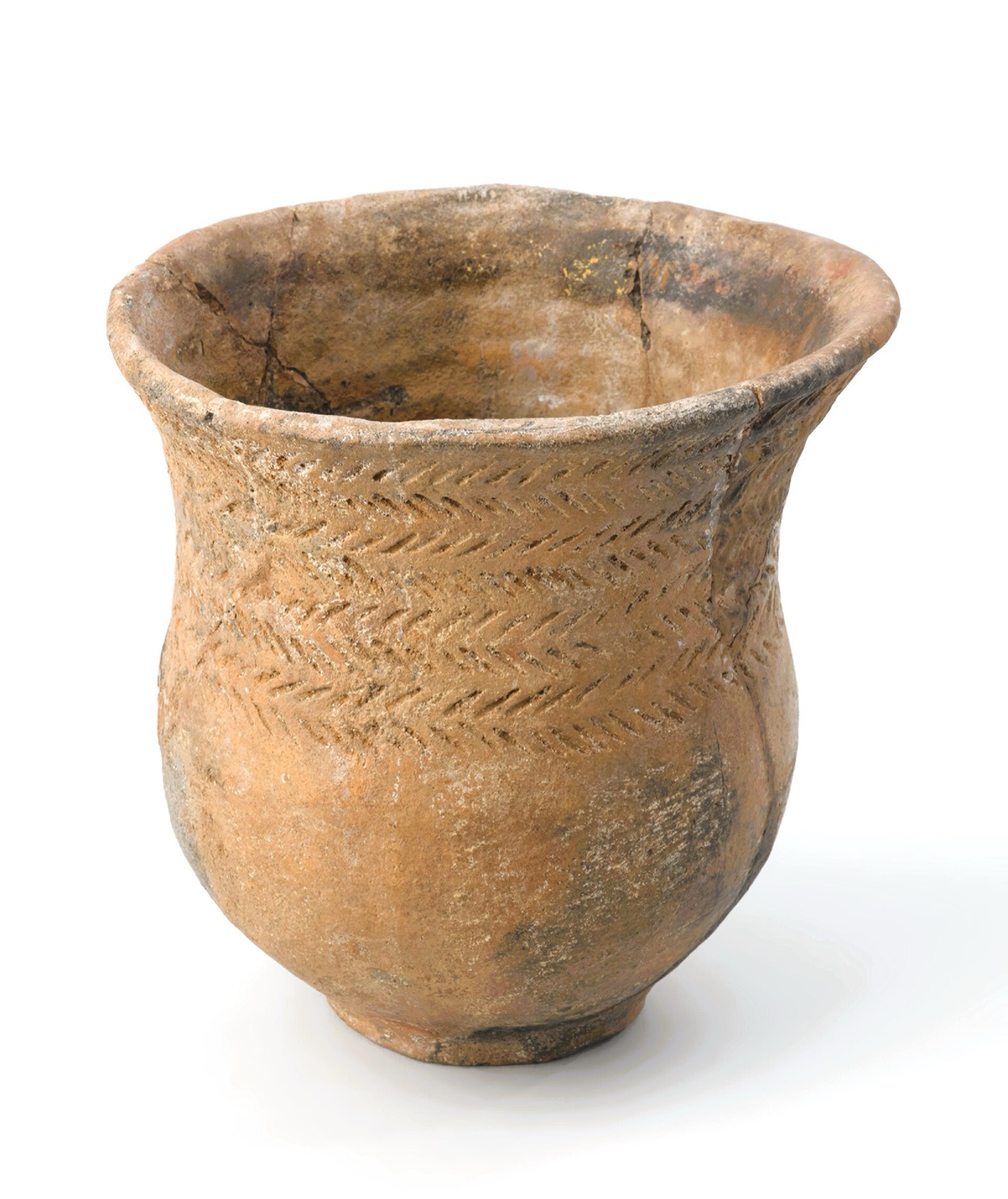
- Central and northern Europe. The 2015 study by Haak and colleagues found that Corded Ware people in Germany, about 4,500 years ago, traced roughly 75% of their ancestry to the Yamnaya. The authors called it a massive migration into the heart of Europe. This steppe ancestry persisted in every central European they sampled for the next 1,500 years, and it is found in nearly all Europeans today.
- Western Europe and Britain. Through the Corded Ware and then the Bell Beaker people, steppe ancestry reached the Atlantic edge, a story told in our guides to where Europeans come from and Celtic DNA.
- South Asia. The Yamnaya never reached India themselves. But their ancestry passed to later steppe herders who, starting around 4,000 years ago, spread through Central Asia into South Asia. A 2019 study of 523 ancient people found that this steppe ancestry has the same profile as that in Bronze Age eastern Europe, and that it became part of one of the two main ancestral populations of South Asia.
Many researchers link these movements to the spread of the Indo-European languages, the family that now includes English, Russian, Greek, Persian and Hindi. The genetic evidence fits that idea well in many places, but language and genes don't always travel together, so it remains a well-supported theory rather than a settled fact.
Do you carry Yamnaya DNA? What a test can show
If you have European, South Asian or Central Asian roots, you very likely carry some ancestry that passed through the Yamnaya. But no one can trace descent to a particular Yamnaya person or group. Five thousand years is around 200 generations, and you descend from a vast number of people from that time.
What you can check is your haplogroups, the branches of your direct maternal and paternal lines:
- Paternal line. Most Yamnaya men whose DNA has been read belong to haplogroup R1b, mainly a branch called Z2103. Today Z2103 is most common in eastern Europe, the Balkans, the Caucasus and western Asia. The R1b branches that dominate western Europe, such as P312 and U106, belong to a sister line that spread with later steppe-descended peoples. Haplogroup R1a, common in eastern Europe and South Asia, is rare in Yamnaya graves; it is linked mainly to the Corded Ware people and later steppe groups further east.
- Maternal line. Yamnaya women carried a mix of maternal haplogroups also found among earlier hunter-gatherers and Caucasus peoples, so a maternal line on its own rarely points to the steppe specifically.
AncestryDNA, 23andMe and MyHeritage compare you with people living today, so their ethnicity estimates don't mention the Yamnaya. To link your DNA to them, you need a comparison with ancient genomes.
Already have a 23andMe, AncestryDNA or MyHeritage file? Open it in our free analyzer. It runs entirely in your browser, and your DNA is never uploaded.
Try the free analyzerOur free analyzer does that with your raw DNA file. It compares your maternal and paternal lineages with more than 16,000 ancient individuals and shows which ancient peoples carried them, including steppe herders where they match. It runs entirely in your browser, so your file is never uploaded. Need your file? See how to download your raw DNA data.
Haven't tested yet? 23andMe reports your maternal haplogroup, plus your paternal one if you are male. For a much finer Y-chromosome branch, which is what separates Z2103 from western R1b, a FamilyTreeDNA test goes deepest. Not sure which test fits? Take our 30-second quiz.
Frequently asked questions
Where did the Yamnaya live?
On the Pontic-Caspian steppe, the grasslands north of the Black and Caspian Seas in today's Ukraine, southern Russia and western Kazakhstan. At their greatest extent, around 3000 BCE, related groups lived from Hungary to Kazakhstan.
Were the Yamnaya Indo-Europeans?
Many linguists and geneticists think they spoke an early Indo-European language, and the 2025 study traces the shared ancestor of Hittite and the other Indo-European languages to their Caucasus–lower Volga forebears. No writing survives from them, so this can't be proven directly, and it is still debated.
What haplogroup were the Yamnaya?
Most Yamnaya men tested so far carried Y haplogroup R1b, mainly the Z2103 branch. A minority carried other lines. Their maternal haplogroups were varied.
Are Yamnaya and steppe ancestry the same thing?
Nearly. "Steppe ancestry" is the genetic signature first identified in the Yamnaya. In people today it usually arrived through later descendants such as the Corded Ware, Bell Beaker and Sintashta peoples, who also mixed with local farmers. See our guide to steppe ancestry.
Sources
- Lazaridis et al. 2025, "The genetic origin of the Indo-Europeans," Nature
- Haak et al. 2015, "Massive migration from the steppe was a source for Indo-European languages in Europe," Nature
- Scott et al. 2022, "Emergence and intensification of dairying in the Caucasus and Eurasian steppes," Nature Ecology & Evolution
- Trautmann et al. 2023, "First bioanthropological evidence for Yamnaya horsemanship," Science Advances
- Librado et al. 2024, "Widespread horse-based mobility arose around 2200 BCE in Eurasia," Nature
- Narasimhan et al. 2019, "The formation of human populations in South and Central Asia," Science