 DNAtest
Haplogroup I1: The Scandinavian Paternal Line
DNAtest360 earns a commission if you buy through links on this page.
If your father's line runs back to Sweden, Norway, Denmark, Iceland or western Finland, there is a good chance it belongs to haplogroup I1. Roughly a third or more of men in those countries carry it. Yet for most of its long life, I1 was almost invisible. The branch is more than 25,000 years old, but every man who carries it today descends from a single man who lived only about 4,600 years ago. What happened in between, and what happened after, is one of the strangest stories in the Y-chromosome tree: a lineage that hung by a thread through the Stone Age, then burst out across the north in the Bronze Age and later rode with Goths, Angles, Saxons and Vikings across Europe.
In short
- I1 (also called I-M253) is a branch of the human Y-chromosome tree, passed from father to son. It split from its sister line, I2, around 27,000 years ago, in the Ice Age world of Europe's hunter-gatherers.
- For about 20,000 years it left almost no trace. All living I1 men share one paternal ancestor who lived roughly 4,600 years ago, probably in northern Europe. Geneticists call this kind of pattern a bottleneck followed by a founder expansion.
- In ancient DNA, I1 appears in force in Late Neolithic and Early Bronze Age southern Scandinavia, about 4,000 years ago, and becomes one of the main paternal lines of Bronze Age, Iron Age and Viking Age Scandinavians.
- Your raw DNA file can usually place you on I1 and often on a branch below it. It traces one line among thousands of ancestors, so it is a clue to one deep root, not a measure of how "Scandinavian" you are.
What is haplogroup I1?
Your paternal haplogroup is your direct father-to-son line, read from the Y chromosome. Every so often a small mutation appears on that chromosome and is passed to every son and grandson of the man who first carried it. Each mutation marks a new branch. (New to this? Start with What is my haplogroup?)
Haplogroup I is one of Europe's oldest paternal lines, carried by the continent's hunter-gatherers long before farming arrived. It has two main branches. I2 was common among those hunter-gatherers, including the Western Hunter-Gatherers, and later among early farmers. I1 is the other branch, defined by a long run of more than 300 shared mutations, of which M253 is the best known. That long run of mutations is itself a clue: it means a great stretch of time passed during which only one line of I1 men survived to have descendants alive today.
Testing companies usually report the branch as I1, I-M253, or by the name of a deeper marker such as I-DF29, I-Z58, I-Z63 or I-L22. Each name sits inside the one before it. The deeper the name, the more precisely it places your line in time and place.
A thread through the Ice Age
The age of I1 has two numbers, and the gap between them is the heart of its story. Estimates from the YFull tree put the split between I1 and I2 at about 27,500 years ago, during the Ice Age. But the most recent common ancestor of all living I1 men lived only about 4,600 years ago, with an error range of several centuries either side.
For the 20,000-plus years in between, I1 is almost absent from the ancient DNA record. Thousands of Stone Age Europeans have now been sequenced, and only a handful have been placed anywhere on the I1 stem. One is a Mesolithic man from the cave of Stora Förvar on Stora Karlsö, a small island off Gotland in the Baltic, who lived thousands of years before farming reached Scandinavia. He carried a few of the mutations that define I1, but not the full set, so he belonged to a side branch that has no known living descendants. Another is a hunter-gatherer of the Azilian culture in Spain, about 13,000 years old, also on an extinct side branch.
So I1 was present in Ice Age and Mesolithic Europe, but as a rare line. Many other lines from that world died out completely. This one survived, just barely, through a single family thread.
One more surprise: I1 is missing from the early farmers who brought agriculture to Scandinavia around 4000 BCE (see Anatolian farmers). Where the I1 line lived during those millennia is still unknown. It may have survived among Scandinavian foragers, or somewhere else in northern or central Europe, before being folded into the peoples who arrived later.
The Bronze Age explosion
Then, around 2600 BCE, one man's descendants began to multiply. His branch, almost every living I1 man today, has the shape geneticists call a star-like expansion: many sub-branches splitting off within a few centuries of each other, the signature of a lineage spreading fast across a growing population. Over 99 percent of living I1 men belong to one sub-branch, I-DF29.
Ancient DNA shows where this happened. Around 2800 BCE, new people with heavy steppe ancestry had entered southern Scandinavia. Archaeologists know them as the Single Grave culture in Denmark and the Battle Axe culture in Sweden and Norway, northern branches of the Corded Ware world. Their men mostly carried R1a.
A few centuries later, I1 men start to appear in graves. Two of the earliest known I1 men are buried in Skåne, at the southern tip of Sweden: one in a burial mound near Abbekås, about 4,000 years old, and another near Öllsjö, from the late Neolithic around 1900 BCE. Both carried a large share of steppe-related ancestry. In the Allen Ancient DNA Resource, the oldest men on the modern I1 branch come from Late Neolithic and Early Bronze Age graves in Denmark, Sweden and Norway, dated about 4,400 to 3,500 years ago.
A large 2024 study of more than 300 ancient genomes from western Eurasia, led by Allentoft, traced what came next. It found that I1 spread rapidly around 2000 BCE, in a movement of people from eastern or northeastern Scandinavia into southern Sweden, Denmark and Norway, linked with a new burial custom of stone cists. The genetic group that carried it became the main ancestry of Scandinavians through the Bronze Age, the Iron Age and the Viking Age, and of later peoples with documented Scandinavian or Germanic links.
This is the world of the Nordic Bronze Age (about 1700 to 500 BCE): sun discs, bronze lurs, rock carvings of ships, and rich burial mounds across Denmark and southern Sweden. I1 was by then one of its most common paternal lines, alongside branches of R1b and R1a.
On the move with Goths, Saxons and Vikings
For most of the Bronze Age and Iron Age, I1 stayed close to home in Scandinavia and the North Sea and Baltic coasts. It was rare elsewhere in Europe. That changed when peoples from the north began to move south and west.
- The Goths and their neighbours. I1 turns up in Iron Age and Roman-era graves of the Wielbark culture in northern Poland, a culture many archaeologists link with the early Goths.
- The Anglo-Saxons. In 2022, Gretzinger and colleagues sequenced hundreds of early medieval people from England and the North Sea coast. They found that many people buried in eastern England in the 5th to 7th centuries drew most of their ancestry from migrants from the continental North Sea coast, today's northern Germany, the Netherlands and Denmark. Many of those men carried I1.
- The Lombards and others. Smaller numbers of I1 men appear in early medieval Italy, Hungary and Austria, in cemeteries of the Migration Period, a time when Germanic-speaking groups moved across the old Roman world.
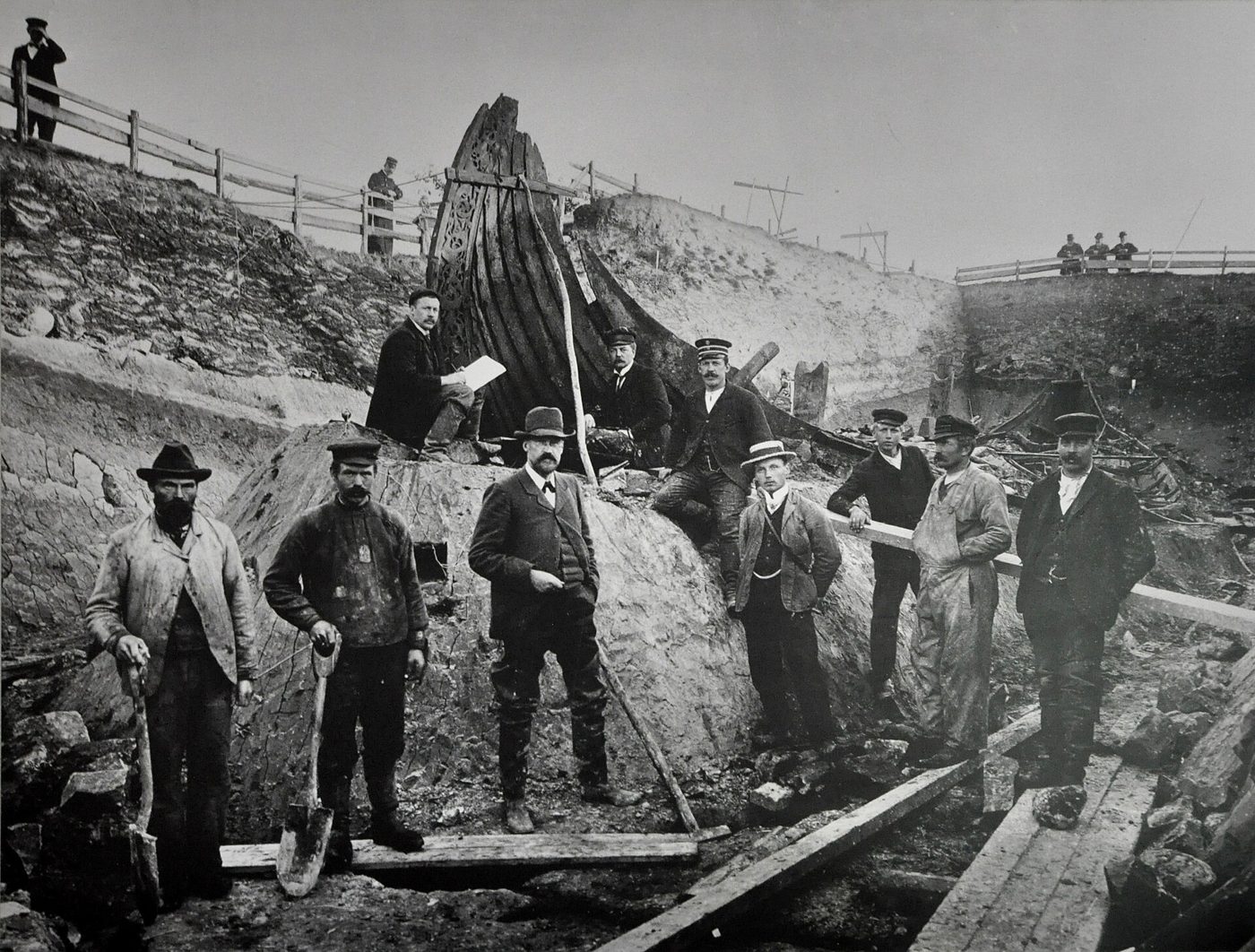
Then came the Vikings. In 2020, Margaryan and colleagues published 442 genomes from the Viking world. I1 was one of the most common paternal lines among Viking Age men, together with R1b and R1a, and it appears in Viking graves from Estonia and Russia to England. Some of the I1 men in Britain and Ireland today may descend from Viking settlers, though others descend from Anglo-Saxons, Normans or later Scandinavian migrants, and a test alone can't tell which (see our Viking DNA guide).
Where I1 is common today
- Sweden: around 38 to 39 percent of men on national averages, and about half in parts of western Sweden.
- Norway, Denmark and Iceland: roughly 35 to 37 percent of men.
- Finland: about 28 percent nationally, and more than half of men in Satakunta, on the west coast facing Sweden.
- Northern Germany, the Netherlands and England: smaller but significant minorities, consistent with the Germanic and Norse migrations above.
Elsewhere in Europe I1 is less common, and in the Americas, Australia and New Zealand it appears mainly through settlers from northern Europe. These figures come from studies of present-day men and vary by region and sample, so treat them as rough guides.
Do you carry I1? What a DNA test can show
Only people with a Y chromosome, usually men, carry a paternal haplogroup. A woman can learn hers by testing her father, a brother, or another man on her direct paternal line.
- Consumer tests such as 23andMe report a paternal haplogroup. Their raw files contain enough Y markers to place most men on I1, and often on DF29 or a branch below it.
- Dedicated Y-DNA tests read much more of the Y chromosome and can reach branches only a few centuries old. Because I1 expanded so fast, its deep branches are crowded close together, and a detailed test helps more than usual in telling them apart.
- What it can't show. Your Y line is one ancestor out of more than a thousand just ten generations back. I1 doesn't make you a Viking, a Goth or a Saxon, and it says nothing about the rest of your family tree. It tells you which road one thread of your ancestry travelled.
Find your branch and the ancient men who shared it
If you've already tested, download your raw DNA file (here's how) and run it through our free analyzer.
Already have a 23andMe, AncestryDNA or MyHeritage file? Open it in our free analyzer. It runs entirely in your browser, and your DNA is never uploaded.
Try the free analyzerThe analyzer reads the Y-chromosome and mitochondrial markers in your file, places your branches on the YFull and PhyloTree trees, and compares them with thousands of ancient individuals. If you're I1, your report shows which ancient men carried your branch, from Bronze Age graves in Denmark and Sweden to Anglo-Saxon and Viking burials. It runs in your browser, so your DNA file is never uploaded.
Haven't tested yet? 23andMe reports your paternal haplogroup and gives you a raw file that works with our analyzer. To pin your line to a precise branch of I1, FamilyTreeDNA's Y-DNA tests go deepest. Not sure which fits? Take our 30-second quiz.
Frequently asked questions
Where did haplogroup I1 originate?
The I1 branch split from I2 among Europe's Ice Age hunter-gatherers about 27,500 years ago, but its exact homeland is unknown. All living I1 men descend from one man who lived about 4,600 years ago, most likely in northern Europe, and the branch first became common in southern Scandinavia in the Late Neolithic and Bronze Age.
Is I1 a Viking haplogroup?
Not strictly. I1 is thousands of years older than the Viking Age, and it was common in Scandinavia long before the first raids. Many Viking Age men carried it, but so did Bronze Age Scandinavians, Anglo-Saxons and other Germanic-speaking peoples. Carrying I1 links one of your lines to that northern world, not to a particular people.
How old is haplogroup I1?
It has two ages. The branch itself is about 27,500 years old, the time it split from I2. The common ancestor of everyone who carries it today lived only about 4,600 years ago. The long gap between the two is why geneticists describe I1 as passing through a severe bottleneck.
What is the difference between I1 and I2?
They are sister branches of haplogroup I that split in the Ice Age. I2 was widespread among Europe's hunter-gatherers and early farmers and is common today in the Balkans, Sardinia and parts of eastern Europe. I1 was rare for most of prehistory, then expanded in Bronze Age Scandinavia and is most common in the Nordic countries today.
Can a woman find out if she has I1?
Not from her own DNA, since women don't carry a Y chromosome. She can test her father, a full brother, her father's brother or his son. Their raw DNA file, run through our analyzer, will show the family's paternal branch.
Sources
- Allentoft et al. 2024, "Population genomics of post-glacial western Eurasia," Nature
- Malmström et al. 2019, "The genomic ancestry of the Scandinavian Battle Axe Culture people and their relation to the broader Corded Ware horizon," Proceedings of the Royal Society B
- Margaryan et al. 2020, "Population genomics of the Viking world," Nature
- Gretzinger et al. 2022, "The Anglo-Saxon migration and the formation of the early English gene pool," Nature
- Lappalainen et al. 2008, "Migration waves to the Baltic Sea region," Annals of Human Genetics
- Wikipedia, "Haplogroup I-M253"