 DNAtest
Anatolian Farmers: The Migration That Brought Farming to Europe
DNAtest360 earns a commission if you buy through links on this page.
Around 8,500 years ago, families from what is now Turkey began crossing into Greece with seed grain, cattle, sheep and goats. Over the next three thousand years their descendants carried that way of life to the Atlantic coast and the Baltic, clearing forest for fields and raising the first great stone monuments of Europe. They are known as the Anatolian Neolithic farmers, and their European descendants as the Early European Farmers. Here's who they were, how far they went, and what part of them survives in your DNA.
In short
- Farming began in the Near East more than 11,000 years ago. Anatolia (modern Turkey) was one of its heartlands, home to Göbekli Tepe and the early town of Çatalhöyük.
- From about 6500 BCE, farmers moved into Greece and the Balkans, then along two routes: up the Danube into central Europe, and along the Mediterranean coast to Italy, France and Spain.
- Ancient DNA settled an old debate: farming spread mainly because people moved, not just because the idea did. Europe's first farmers descended directly from farmers of the Aegean and Anatolia.
- Nearly every European today carries some of their ancestry. It is strongest in southern Europe, and Sardinians are the closest living match. Your raw DNA file can show whether your maternal or paternal line goes back to them.
Who were the Anatolian farmers?
Anatolia is the great peninsula between the Black Sea and the Mediterranean that makes up most of Turkey. It sits on the edge of the Fertile Crescent, the arc of land where people first grew wheat and barley and tamed sheep, goats, cattle and pigs.
In the southeast, at Göbekli Tepe, people raised huge T-shaped stone pillars carved with foxes, snakes and vultures around 9500 BCE, before farming was fully established. It is now a UNESCO World Heritage site, and it has upended the old idea that monuments came only after farming made people rich and settled.
On the central plateau, foragers at a site called Boncuklu began tending crops, and by about 7100 BCE Çatalhöyük had grown into one of the world's earliest large towns. Its mud-brick houses were packed so tightly that people walked across the roofs and climbed down ladders to get inside. They painted their walls, set plastered bull horns into them, and buried their dead beneath the floors.
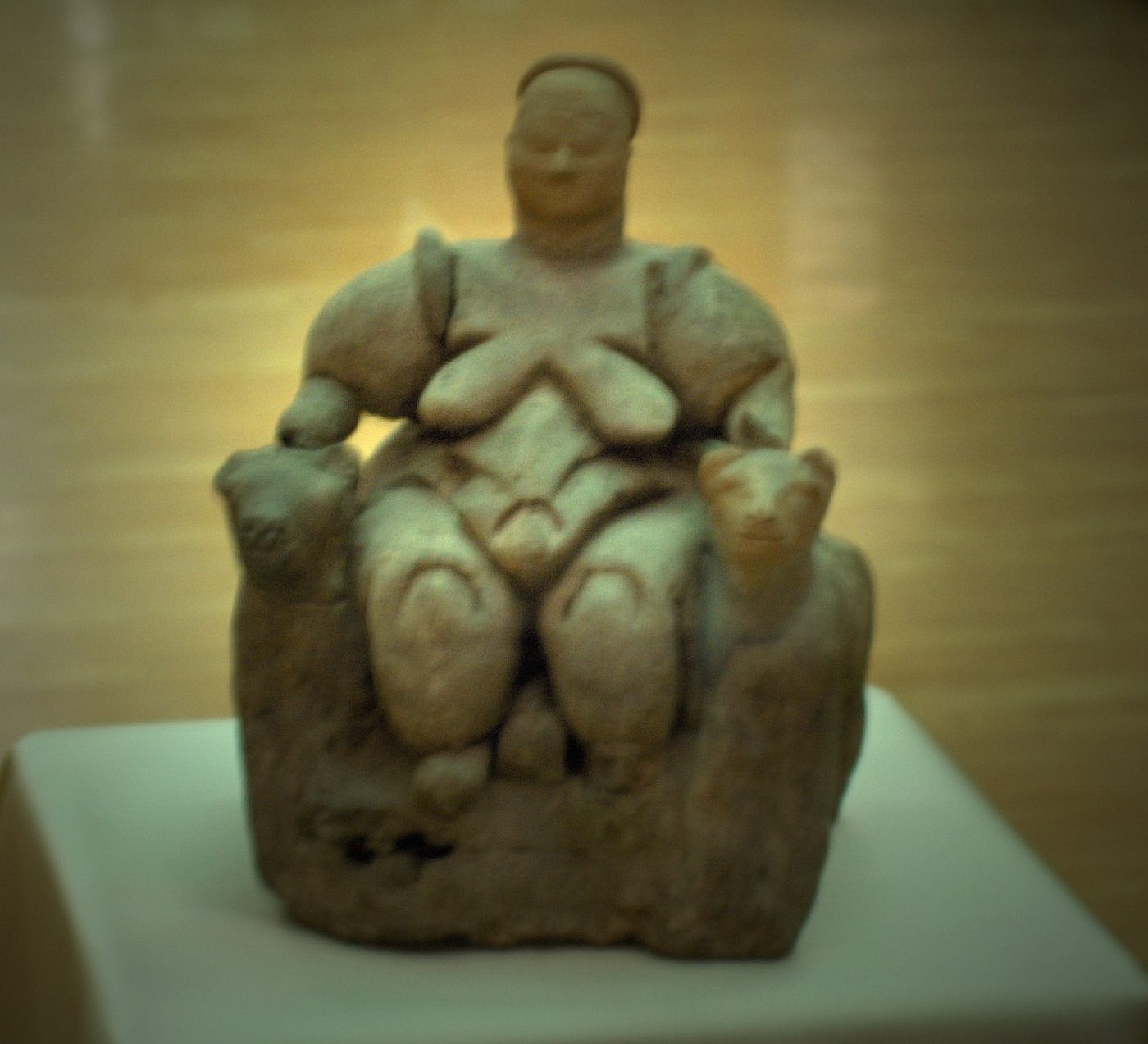
Their crops were einkorn and emmer wheat, barley, lentils, peas and flax. Their animals gave them meat, milk, hides and wool. This "Neolithic package" is what they would carry west.
Where did the Anatolian farmers come from?
You might guess that farming arrived in Anatolia with migrants from somewhere further east or south. Ancient DNA says mostly not.
In 2019, a team led by Michal Feldman read the genome of a 15,000-year-old hunter-gatherer from Pınarbaşı in central Anatolia, from long before farming. They found about 80–90% genetic continuity between Anatolia's hunter-gatherers and its first farmers. In other words, the people of central Anatolia largely became farmers themselves. The study also detected two smaller incoming streams: an early one related to people of Iran and the Caucasus, and a later one linked to the ancient Levant.
A 2016 study by Iosif Lazaridis and colleagues showed how different the Near East's first farmers were from each other. The farmers of the southern Levant and of the Zagros Mountains in Iran were genetically distinct, and each descended from local hunter-gatherers. So there wasn't one "farmer people," but several. The Anatolian branch is the one that went to Europe. Others spread into East Africa, the steppe and South Asia.
The great migration into Europe
For more than a century, archaeologists argued about how farming reached Europe. Did local hunter-gatherers learn it from their neighbours, or did farmers themselves move in?
Ancient DNA gave a clear answer. In 2015, a study of 230 ancient Eurasians by Iain Mathieson and colleagues reported the first genome-wide data from Neolithic Anatolian farmers, from Barcın near the Sea of Marmara, and showed they belonged to the population that was the source of Europe's first farmers. A 2016 study by Zuzana Hofmanová and colleagues added early farmers from northern Greece and northwest Turkey and found a direct genetic link from them to early farmers across the Mediterranean and central Europe. The farmers moved, and they kept moving.
They spread along two main routes:
- The Danube route. From the Balkans, farmers followed the river valleys north and west. The Linear Pottery culture (often called LBK, about 5500–4900 BCE) spread from Hungary to the Paris Basin in a few centuries. Its people built timber longhouses, some more than 30 metres long, and cleared the forest for fields.
- The Mediterranean route. Other farmers moved along the coast, almost certainly by boat, reaching Italy, southern France and Iberia. Their pottery was often decorated with shell impressions, which archaeologists call Impressed and Cardial Ware.
The journey took around two thousand years. Farming reached Britain and Ireland only around 4000 BCE, a millennium after it reached nearby parts of the continent. A 2019 study of 67 Neolithic Britons by Selina Brace and colleagues found that farming was brought by incoming continental farmers who almost entirely replaced the island's hunter-gatherers. Their closest genetic links were to Neolithic Iberia, showing that most of Britain's first farmers descended from Aegean farmers who had followed the Mediterranean route.
Farmers and hunter-gatherers
The newcomers found Europe already inhabited. The Western Hunter-Gatherers had lived there since the end of the Ice Age, and their story is told in our guide to Europe's first people.
In most places the two peoples didn't simply clash or vanish. They lived side by side, sometimes for more than a thousand years, and gradually mixed. As a result, the farmer populations of later centuries carried a growing share of hunter-gatherer ancestry. How much varied a lot by region: little in the earliest farmers of the Balkans, more in parts of western and northern Europe, and very little in Neolithic Britain, where Brace and colleagues found no later rise in hunter-gatherer ancestry at all.
Life wasn't always peaceful. Mass graves such as Talheim in Germany, from the Linear Pottery period, show deadly violence between communities. But overall, the farmers' numbers grew, and their way of life became the foundation of European farming.
The builders of Europe's megaliths
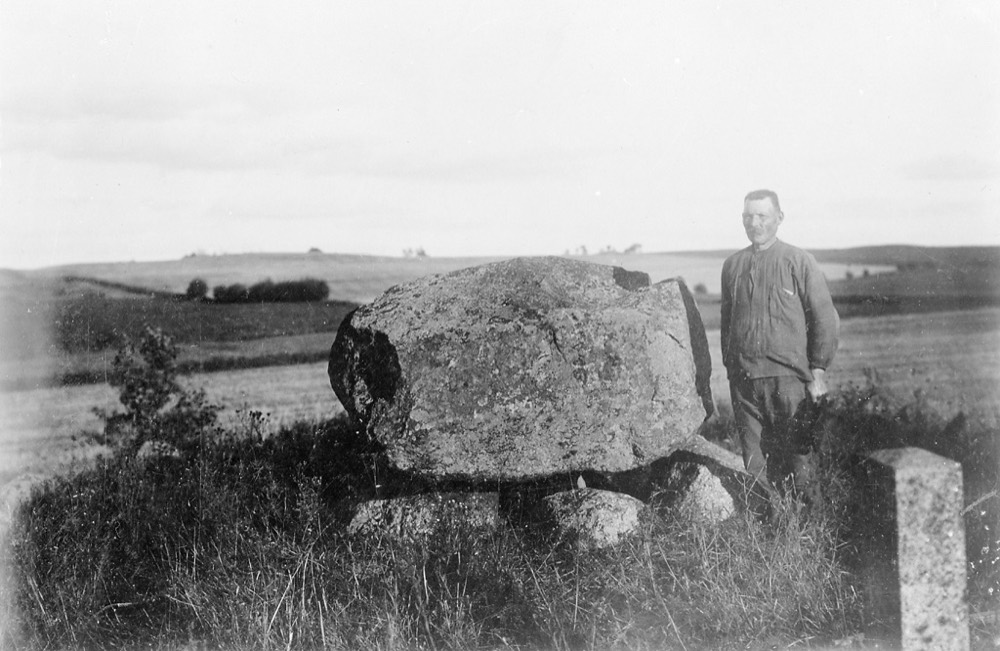
The descendants of these farmers raised many of Europe's most famous ancient monuments: the stone rows of Carnac in Brittany, the passage tomb of Newgrange in Ireland, whose chamber is lit by the midwinter sunrise, and the first phases of Stonehenge. Dolmens and long barrows across the north were their tombs.
One of these farmers' descendants is known to almost everyone: Ötzi the Iceman, who died in the Alps around 3300 BCE. A high-quality genome published in 2023 found that he had no detectable steppe ancestry and retained the highest share of Anatolian-farmer-related ancestry among European populations of his time, a sign of a fairly isolated Alpine community. It also found he likely had darker skin than present-day Europeans, which matches his preserved body.
From about 2900 BCE, steppe-descended people arrived, and in Britain the Bell Beaker newcomers largely replaced the population that built Stonehenge. That's the next chapter, told in our guides to the Yamnaya and steppe ancestry.
Do you carry their DNA? What a test can show
If you have European roots, you almost certainly do. Early farmer ancestry is one of the three main ingredients of Europeans today, alongside hunter-gatherer and steppe ancestry (see where Europeans come from). It is generally highest in southern Europe. Sardinia stands out: a 2020 study of 70 ancient Sardinians found that the island's earliest people were closely related to western Mediterranean Neolithic farmers, followed by long genetic continuity through the Bronze Age. Anatolian-farmer-related ancestry is also widespread in the Near East today.
But no test can tie you to a particular farming village or family. Eight thousand years is more than 300 generations. What you can check is your haplogroups:
- Paternal line. The Y-chromosome line found most often in Neolithic farmers is haplogroup G2a. Ötzi carried a G2a branch. Today G2a is fairly uncommon in most of Europe, but it is still found around the Caucasus, the Mediterranean, and in Sardinia and the Alps. Other early farmer men carried lines such as H2, E1b1b, T and J2.
- Maternal line. Early farmers carried many maternal haplogroups that are still common, including K, J, T2, N1a, H, X and W. N1a is a well-known marker of the Linear Pottery farmers but is rare today. Because some of these lines were also carried by other peoples, a maternal haplogroup alone is a clue, not proof.
AncestryDNA, 23andMe and MyHeritage compare you with people living today, so their ethnicity estimates may say "Sardinian" or "Southern European" but won't name Neolithic farmers. To see that link, you need a comparison with ancient genomes.
Already have a 23andMe, AncestryDNA or MyHeritage file? Open it in our free analyzer. It runs entirely in your browser, and your DNA is never uploaded.
Try the free analyzerOur free analyzer does that with your raw DNA file. It compares your maternal and paternal lines with more than 16,000 ancient individuals and shows which ancient peoples carried them, including Europe's first farmers where they match. It runs entirely in your browser, so your file is never uploaded. Need your file? See how to download your raw DNA data.
Haven't tested yet? 23andMe reports your maternal haplogroup, plus your paternal one if you are male. For the deepest Y-DNA and mtDNA branches, a FamilyTreeDNA test goes furthest. Not sure which test fits? Take our 30-second quiz.
Frequently asked questions
Did farming spread to Europe by migration or by ideas?
Mainly by migration. Ancient genomes show Europe's first farmers descended directly from farmers of the Aegean and Anatolia. Local hunter-gatherers mixed into these populations over time, and in a few places, such as the eastern Baltic, they took up farming more slowly.
When did farming reach Europe?
Farmers reached Greece and the Balkans around 6500 BCE, central Europe around 5500 BCE, and Britain and Ireland around 4000 BCE.
Who has the most Early European Farmer ancestry today?
Sardinians are the closest living match. Early farmer ancestry is generally higher in southern Europe and lower in the north and east, where steppe and hunter-gatherer ancestry are stronger.
What haplogroup were the Anatolian farmers?
Most farmer men whose DNA has been read carried Y haplogroup G2a, with others in H2, E1b1b, T and J2. Their maternal haplogroups were varied, including K, J, T2, N1a, H, X and W.
Were Europe's first farmers the same people who built Stonehenge?
Yes. Stonehenge was begun around 3000 BCE by Neolithic Britons, descendants of the farmers who arrived about a thousand years earlier. Its last big building phases date to around the time Bell Beaker people with steppe ancestry began to arrive.
Sources
- Mathieson et al. 2015, "Genome-wide patterns of selection in 230 ancient Eurasians," Nature
- Hofmanová et al. 2016, "Early farmers from across Europe directly descended from Neolithic Aegeans," PNAS
- Lazaridis et al. 2016, "Genomic insights into the origin of farming in the ancient Near East," Nature
- Feldman et al. 2019, "Late Pleistocene human genome suggests a local origin for the first farmers of central Anatolia," Nature Communications
- Brace et al. 2019, "Ancient genomes indicate population replacement in Early Neolithic Britain," Nature Ecology & Evolution
- Wang et al. 2023, "High-coverage genome of the Tyrolean Iceman reveals unusually high Anatolian farmer ancestry," Cell Genomics
- Marcus et al. 2020, "Genetic history from the Middle Neolithic to present on the Mediterranean island of Sardinia," Nature Communications