 DNAtest
Ashkenazi Jewish Ancestry: What Ancient DNA Shows
DNAtest360 earns a commission if you buy through links on this page.
In medieval Hebrew, the word Ashkenaz, the name of a grandson of Japheth in the Book of Genesis, came to mean the lands along the Rhine. The Jews who lived there, and their descendants who later spread across Poland, Lithuania, Ukraine and the rest of the world, became known as the Ashkenazim. Their own tradition traces them back to the ancient Land of Israel. For decades scientists have asked how much of that journey can be read in DNA, and in the last few years, genomes from medieval Jewish burials in England and Germany have added a remarkable new chapter.
In short
- Genetic studies find that Ashkenazi Jews carry a mix of Middle Eastern and European ancestry. One 2014 study modelled it as roughly an even split.
- The Middle Eastern part resembles the ancient and present-day peoples of the Levant, consistent with the historical origins of Jewish communities there. The European part came over many centuries, much of it likely from southern Europe and later some from eastern Europe.
- Ashkenazim went through a founder event: at some point in the Middle Ages the community's ancestors numbered only a few hundred effective people, before growing to millions.
- Medieval genomes from Norwich, England (1190 CE) and Erfurt, Germany (14th century) show this founder event and the main ancestry sources were already in place by then.
- The idea that Ashkenazim descend mainly from the Khazars is not supported by the genetic evidence.
From the Levant to the Rhine
The story begins in the southern Levant. The Iron Age kingdoms of Israel and Judah grew largely out of the local Bronze Age population, the people archaeologists associate with Canaanite culture. Assyria conquered the northern kingdom around 722 BCE, and Babylon destroyed Jerusalem in 587/586 BCE and carried much of Judah's elite into exile.
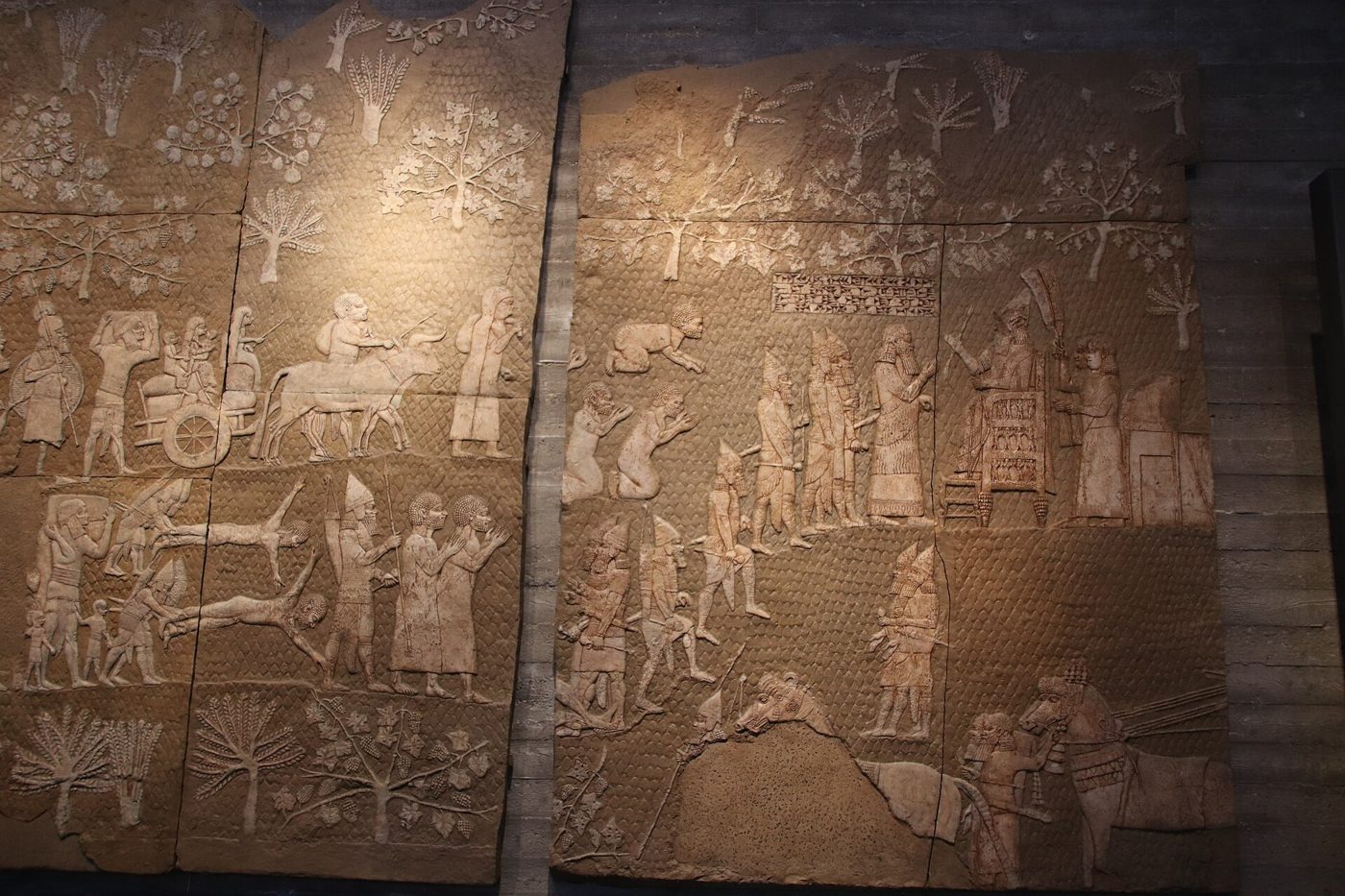
Over the following centuries Jewish communities spread across the Persian, Greek and Roman worlds. By the 2nd century BCE there were Jews in Rome, and after the Romans destroyed the Second Temple in 70 CE, the Diaspora grew around the Mediterranean. The earliest written record of Jews north of the Alps is a decree of Emperor Constantine in 321 CE, addressed to the city council of Cologne.
Ashkenazi culture took shape around the 10th and 11th centuries in the Rhineland towns of Speyer, Worms and Mainz, known together by their Hebrew initials as ShUM. Their synagogues, ritual baths and cemeteries are now a UNESCO World Heritage Site. Scholars there, such as the commentator Rashi, who studied in Worms, shaped Jewish learning for centuries. Most historians think these communities were founded largely by Jews who came north from Italy and France, though the details are debated.
Massacres, migration and a language
The medieval centuries were often brutal. Crusaders attacked the Rhineland communities in 1096. Jews were expelled from England in 1290 and from France more than once. During the Black Death of 1348 to 1350, Jews in many German towns were falsely blamed for the plague and murdered. Many moved east, invited by rulers of Poland and Lithuania, where Jewish life flourished from the late Middle Ages onward.
They carried with them Yiddish, a language built mainly on medieval German, written in Hebrew letters, and rich in Hebrew, Aramaic and later Slavic words. By the early 20th century, Ashkenazim made up most of the world's Jews. Today, most Ashkenazi Jews live in the United States and Israel, with large communities elsewhere.
What DNA shows: two main sources of ancestry
Genome-wide studies agree on the broad picture. Ashkenazi Jews form a distinct genetic cluster that sits between populations of Europe and the Middle East. A 2010 study by Behar and colleagues found that most Jewish Diaspora groups, Ashkenazi among them, cluster together and lie close to Druze and Cypriot populations, a sign of shared Levantine roots rather than simple resemblance to their European neighbours.
A 2014 study by Shai Carmi and colleagues sequenced 128 complete Ashkenazi genomes. Modelling the population's deep history, they concluded that Ashkenazim are an even admixture of European and likely Middle Eastern origins. Other studies give somewhat different proportions depending on method and reference samples, but nearly all find substantial contributions from both.
The Middle Eastern component resembles the ancestry of ancient people sampled in the southern Levant, who descended from the region's Neolithic farmers mixed with newcomers related to the Zagros and Caucasus. The European component arrived through marriage and conversion over many centuries. Several studies point mostly to southern Europe, especially Italy, as its main early source, with later additions from eastern Europe. Where exactly each part came from, and when, is still actively researched.
A medieval bottleneck: a few hundred ancestors
One of the most striking findings is how small the Ashkenazi founding population was. Long stretches of DNA shared between unrelated Ashkenazim today reveal what geneticists call a founder event or bottleneck. Carmi's team estimated an effective population of only about 350 individuals at its narrowest, followed by rapid growth into the millions. (An "effective" population is a statistical measure, smaller than the actual headcount.)
The maternal lines tell the same story. A 2006 study by Doron Behar and colleagues found that about 40 percent of Ashkenazi Jews descend along their direct maternal line from just four women, carrying mitochondrial lineages that are nearly absent in other populations except at low levels in other Jewish groups. Those four lineages are branches of haplogroups K1a1b1a, K1a9, K2a2a and N1b.
Where those four women lived is debated. Behar's team thought they were likely of Near Eastern ancestry. A 2013 study by Marta Costa and colleagues argued instead that all four major founders, and most minor ones, have deep roots in prehistoric Europe, which would point to European women joining the community. Both studies are by serious teams, and the question is not fully settled.
This bottleneck is also why certain genetic conditions, such as Tay-Sachs disease, are more common among Ashkenazim. A variant carried by one founder can become relatively frequent when the population later grows from a small base.
Voices from medieval graves: Norwich and Erfurt
For years the founder event could only be inferred from living people. Then ancient DNA reached the medieval Jewish world itself.
In 2004, builders in Norwich, England, found the remains of at least 17 people, many of them children, at the bottom of a medieval well. A 2022 study by Selina Brace and colleagues sequenced six of them. Revised radiocarbon dating fits a recorded attack on the city's Jews on 6 February 1190. All six had strong genetic affinities with modern Ashkenazi Jews, four were closely related, and the team found four disease-linked variants known among Ashkenazim today. That meant those variants were already common centuries earlier than previously thought. At least one of them likely had red hair.
In Erfurt, Germany, a salvage excavation of the medieval Jewish cemetery allowed a team led by Shamam Waldman and Shai Carmi to study 33 people from the 14th century. They were genetically similar to modern Ashkenazim, but more variable in their eastern European-related ancestry. A third of them carried a maternal lineage common among Ashkenazim today, and eight carried disease variants still found in the community. The authors concluded that the Ashkenazi founder event and the main sources of ancestry pre-dated the 14th century, and that medieval communities were more varied than their descendants. Erfurt's Old Synagogue and medieval ritual bath, part of the Jewish-Medieval Heritage of Erfurt, joined the UNESCO list in 2023.
The Khazar theory
The Khazars were a Turkic-speaking people whose khaganate ruled the steppe north of the Caucasus from about the 7th to 10th centuries. Some of their elite are said to have converted to Judaism, and since the 19th century writers have proposed that Ashkenazim descend mostly from them. Genetic studies have not supported this. Ashkenazi ancestry is best explained by Levantine and European sources, and the signals sometimes read as "Caucasus" ancestry are better explained by ancient Middle Eastern ancestry shared across the region. The Khazar theory has also been exploited for political ends, which is one more reason to stick to the evidence.
Do you carry Ashkenazi ancestry? What a test can show
This is one of the things consumer DNA tests do best. Because Ashkenazim share so much recent ancestry, their DNA is distinctive, and tests like 23andMe and AncestryDNA can usually detect Ashkenazi ancestry clearly, even when it comes from one great-grandparent. The same shared ancestry has a side effect: Ashkenazi testers often get many more DNA matches than usual, and the predicted relationships can look closer than they really are, because small shared segments add up across many lines of descent.
What a test can't do is tell you whether someone is Jewish. Jewish identity is religious, cultural and communal, and people of every background have joined the Jewish people through conversion. DNA records ancestry, not identity.
Your haplogroups can add a deeper layer:
- Maternal line. If your mitochondrial haplogroup is K1a1b1a, K1a9, K2a2a or N1b, you may share one of the four major Ashkenazi founding lines. These branches of haplogroups K and N are rare elsewhere.
- Paternal line. Common Ashkenazi Y-DNA lines include branches of J1, J2 and E1b1b, which are widespread in the Middle East, as well as R1a, G and others. A 2017 study traced one R1a branch, R1a-Y2619, carried by about two-thirds of Ashkenazi Levites, to a single Middle Eastern ancestor who lived roughly 1,700 years ago.
Sharing one of these lines connects you to a single ancestral thread, not to your whole family tree, and never to a specific biblical figure or tribe.
Already have a 23andMe, AncestryDNA or MyHeritage file? Open it in our free analyzer. It runs entirely in your browser, and your DNA is never uploaded.
Try the free analyzerOur free analyzer reads your raw DNA file and compares your maternal and paternal lines with more than 16,000 ancient individuals, including people from the Bronze and Iron Age Levant such as the Phoenicians and their neighbours. It runs entirely in your browser, so your file is never uploaded. Need your file first? See how to download your raw DNA data.
Haven't tested yet? 23andMe reports an Ashkenazi Jewish ancestry category and your maternal haplogroup, plus your paternal one if you are male. For a detailed paternal branch, a FamilyTreeDNA Y-DNA test goes furthest. Not sure which fits? Take our 30-second quiz.
Frequently asked questions
Where did Ashkenazi Jews originally come from?
Their ancestry traces partly to the ancient Levant, the region of the Iron Age kingdoms of Israel and Judah, and partly to Europe, through centuries of life in Italy, the Rhineland and later eastern Europe. One 2014 study modelled the two sources as roughly equal.
Are Ashkenazi Jews genetically Middle Eastern or European?
Both. Genome studies place Ashkenazim between Middle Eastern and European populations, close to other Jewish Diaspora groups and to Levantine populations such as the Druze and Cypriots.
Are Ashkenazi Jews descended from the Khazars?
The genetic evidence does not support it. Large genome-wide studies explain Ashkenazi ancestry through Levantine and European sources, with no clear sign of a major Khazar contribution.
Can a DNA test tell if I'm Jewish?
A test can usually detect Ashkenazi Jewish ancestry, because it is genetically distinctive. But being Jewish is a matter of religion, culture and community, not DNA.
Why do Ashkenazi Jews have so many DNA matches?
Because the community descends from a small medieval founding population and often married within it, Ashkenazim share many small DNA segments. That raises match counts and can make relatives look closer than they are.
Sources
- Behar et al. 2006, "The matrilineal ancestry of Ashkenazi Jewry: portrait of a recent founder event," American Journal of Human Genetics
- Behar et al. 2010, "The genome-wide structure of the Jewish people," Nature
- Costa et al. 2013, "A substantial prehistoric European ancestry amongst Ashkenazi maternal lineages," Nature Communications
- Carmi et al. 2014, "Sequencing an Ashkenazi reference panel supports population-targeted personal genomics and illuminates Jewish and European origins," Nature Communications
- Brace et al. 2022, "Genomes from a medieval mass burial show Ashkenazi-associated hereditary diseases pre-date the 12th century," Current Biology
- Waldman et al. 2022, "Genome-wide data from medieval German Jews show that the Ashkenazi founder event pre-dated the 14th century," Cell
- Behar et al. 2017, "The genetic variation in the R1a clade among the Ashkenazi Levites' Y chromosome," Scientific Reports
- Wikipedia, Ashkenazi Jews, Khazar hypothesis of Ashkenazi ancestry and ShUM cities